THE IMPORTANCE OF COACHING AND MENTORSHIP (Searchfunder Interview)

August 12, 2018
by a searcher from Massachusetts Institute of Technology - MIT Sloan School of Management in Nashville, TN, USA
SEARCHFUNDER INTERVIEW OF MAX SADLER , PART II
We spoke with Max Sadler, whose Inman Square Capital purchased Advanced Network Solutions on searching, operating and his Smarter Sales consultancy.
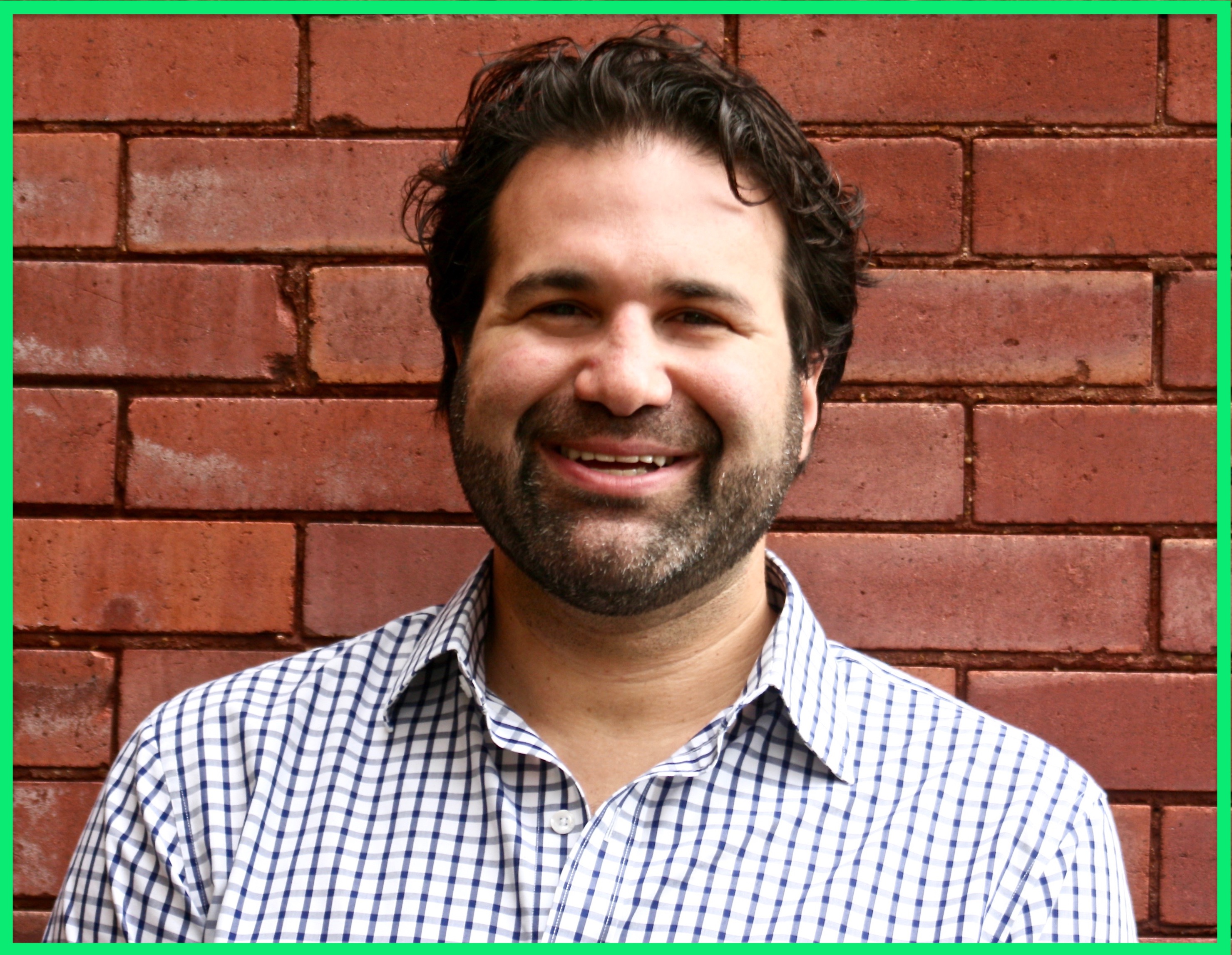 Now you are consulting, are you primarily consulting for searchers?
While I do consult with searchers, I didn’t set out to do so. I have a number of healthcare technology clients. (Nashville is a hub for healthcare tech companies).
My favorite thing in the search fund world is that searchers share ideas. I am still friendly with many of the searchers I cold-called while at MIT. I was consulting for local companies in Nashville and had done a little search fund investing. I got a call from an MIT alum who was acquiring a business. He asked me if I could assist on the transition. Another searcher contacted me about building a sales team. I enjoy helping out and giving back based on my experience.
How has search changed over time?
There are so many searchers. As far as I can tell, it’s smart young people finding companies to buy. I don’t know if there is more competition. The universe of potential targets is so large that I never considered there might be competition.
What do you know today that you wish you had known when you started searching?
You are hiring yourself for 3 to 5 to 7 years. If this is a job that the searcher wants, it’s great. If it’s not, then the searcher should heed that as a warning. I see it a lot where a searcher looks solely at the opportunity or the economics. No investor is going to make a searcher go forward with a deal that does not suit them. I thought that way as a searcher.
Also, there’s no perfect deal out there but there are good deals to be found.
What do you know today that you wish you had known when you started operating?
Having somewhere to turn for help that is not inside the investor base or the board is key. Coaching, support, mentorship is so important, especially as a solo. However, even as a pair, you need diversity of opinion. I had a client to call me on his way to work to mull over idea. I didn’t have that and wish I had. I think I would have been even more successful with that kind of a resource.
In what way have you been able to give back?
For searchers, other CEOs or heads of Sales, I’ve been able to provide them with a fresh look at over all change management, to assess where they are going in sales and marketing, client services and finance. I’ve been able to be a sounding board and provide sage advice based on my experience. I can talk to the people within their organization as an outsider and to identify where short comings and pitfalls might be.
Can you give me an example?
Sure. I have a client who had purchased a company. Within six months, he wanted an evaluation of his sole sales person. He wanted to talk through Salesforce, what the stages looked like, their sales process and their materials. I was able to do a deep dive audit, mapped out the process for them. I gave them a series of recommendations. I provided them with a quoting template and a set price book with approvals since they sold products on top of services. I was able to add value for a CEO, who doesn’t have the experience with sales nor does he have the time. He was busy trying to migrate them onto QuickBooks and other critical projects. Being able to my leverage my experience to help get things done and move the company forward. I am about to oversee my sixth Salesforce migration either as my own CRM or a client’s CRM. I can set it up to give the business the intelligence that any CEO actually needs, especially ones with a Board of Directors. I learned it being a search fund CEO. There was a lot of pain and suffering then when I first did it in###-###-#### Now, I have it down. It’s useful to know what our customer acquisition cost is; what is our lifetime customer value; how much are we paying for leads, etc. Very few search funds targets have that kind of information.
After the first six months of learning the business, it seems like searchers are focused on growth, which obviously means looking at the sales engine?
Indeed, and there are very few searchers with a sales background. Search funds, and business schools in general, tend to attract folks with operations and finance experience.
I had a bit of a sales background through web retail. I know only a few other searchers with sales experience. The people who really, really know sales, who have carried the quota and have run a sales team are rare. How many leads do I need this month, how many deals do I know need to close this month, this is what my pipeline looks like? It’s ironic because the search process is all a sales funnel. Sales isn’t hard, but there is some basics you need to be trained on and some set up.
Aren’t you working against yourself here? Aren’t consultants supposed to say how hard it is and shroud it in magic?
It’s not hard to do but it takes time, which search fund CEOs don’t have much of. Everyone can sell.
I’ve been in businesses where you sell the wrong thing – something that doesn’t work. Also, not all customers are good customers. When we bought ANS, we culled the customer base because we did not make money on some customers. You’re getting rid of the customers you don’t want. A lot of the clients I work with, don’t know how profitable each customer is and can’t tell me who a good customer is.
Sometimes the client you spend the most time on isn’t the most profitable for you? In fact, it may be the inverse.
By definition, if you’re spending the most time on them, they probably aren’t as profitable as the ones you don’t spend much time on.
What else do you know today that you wish you known when you started operating?
Pull the trigger fast. At the end of the day, you are the boss. I never fully 100% believed that. The investors are there because you asked them to be there. The employees are there because they work for you. There’s a level of humility and servant-leadership that needs to happen to make the ship go in the correct direction. Ultimately, the buck stops with the boss. If this is a hard decision that needs to be made, no one else will make it for you. You have to be able to say: “This is my decision. I invite people to disagree with it.” In the United States, there’s a professional management class who appears to have meetings and argue over things but doesn’t necessarily take decisive action. It’s easy to fall into that trap. At the end of the day, the boss has to make the call.
Anything else from your operating experience?
Checking the base case that we used to purchase the business. Checking all of those assumptions 6 and 12 months into operating was key for us. It was key to be able to admit that there were 1 or 2 assumptions here, this is why we made them, but we need to change something up because of this or that. There’s some humble pie you have to eat there. There’s no point in operating a business under assumptions that you know aren’t true. The model is easy to build but it’s based on imperfect information. You buy the business based on the model.
That probably takes a little courage?
It takes a lot of courage. One of my investors said to me, “I’m not investing in this for the first company that we buy. I investing in this for the 2nd and 3rd company that we buy.” This is a learning experience. You’re going to learn.
How engaged was your Board?
The Board was very engaged. We were communicating with them monthly. More often, of course, in the beginning.
Summary of Insights
Here are our a few of the key takeaways from our discussion with Max:
- • To paraphrase Max: If an employee is not betting on your success, why are you betting your success on them? To that end, be confident and swift in your decisions about cancerous employees who can’t/won’t adjust to the transition. Be skeptical of claims that any employee is indispensable.
- • You’re hiring yourself as CEO of the company, be sure it’s a job you want.
- • Don’t be afraid to walk away from a sketchy seller.
- • Tough economic times may create attractive buying opportunities, but financing can be tough.
- • Having access to consultants/mentors/coaches outside of your company and investor network can be invaluable.
in New York, NY, USA
from Boston University in Boulder, CO, USA